Join now new beginners class Every tuesday 17:45 - 19:00
Brief History of Aikido
ORIGINS AND DEVELOPMENT:
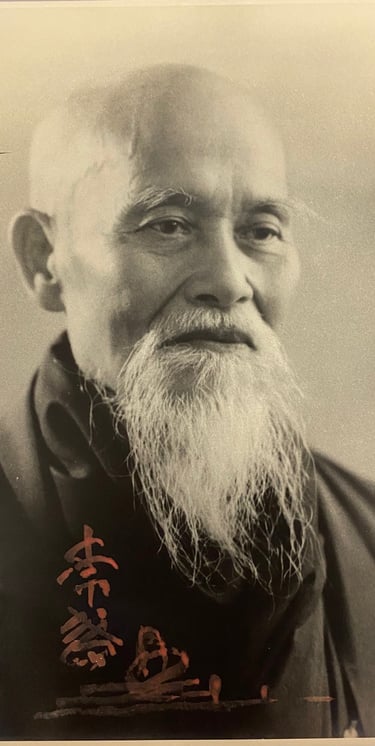
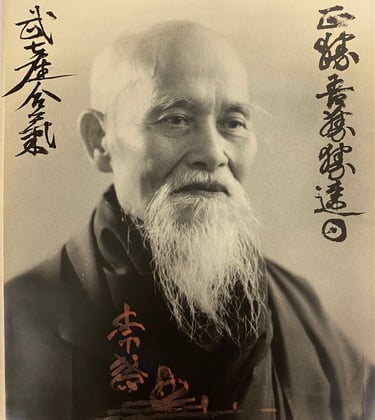
Founder: Morihei Ueshiba (1883–1969), a Japanese martial artist. Known as O-Sensei.
Roots: Aikido evolved from Daito-ryu Aiki-jujutsu and other traditional Japanese martial arts. Ueshiba combined these techniques with his philosophical and spiritual beliefs, particularly influenced by Omoto-kyo, a Shinto-derived religion emphasizing harmony.
Ueshiba refined his techniques while teaching martial arts in Japan. He began emphasizing blending with an opponent’s energy rather than meeting force with force.
After World War II, Ueshiba focused more on peaceful, harmonious applications of martial techniques. This period solidified the philosophical core of Aikido.
PHILOSOPHY AND PRINCIPLES:
Core principle: Neutralize attacks without harming the attacker. Techniques include throws, joint locks, and pins.
Spiritual aspect: Ueshiba stressed self-improvement, harmony, and reconciliation, making Aikido both a physical and philosophical practice.
Aikido today is a global martial art of harmony. Practiced in over 140 countries, it blends graceful throws, joint locks, and safe falling techniques with a philosophy of peace and self-improvement. Modern dojos welcome people seeking physical skill, mental focus, and spiritual growth rather than competition. Through movement, discipline, and respect, Aikido teaches us to redirect conflict, embrace harmony, and grow stronger within ourselves - just as O-Sensei envisioned. At Aikido Shinkai Malta, we blend tradition with modern training to help you grow in strength, balance, and peace.